

The biggest change in flu testing is that a result good enough to act on can now come back before the patient leaves the room. A decade ago the choice was a quick antigen test that missed roughly a third of cases or a laboratory PCR that took hours or days. Today rapid molecular tests return laboratory-grade results in 15 to 30 minutes, multiplex panels check for flu and COVID-19 from one swab, and the first over-the-counter test that detects flu has been authorised by the US FDA for home use.
Which test a clinic uses still matters, because each type trades speed, cost and accuracy differently, and because flu testing is only useful if the sample is taken at the right time. Understanding the difference between PCR and antigen tests for COVID-19 in the UAE also provides useful context for how these testing technologies compare. The methods below are described using the US Centers for Disease Control and Prevention’s guidance for clinicians.
Why Flu Testing Matters
Flu, COVID-19 and the common cold start with the same fever, cough and aches, and no doctor can tell them apart reliably by examination. A confirmed diagnosis changes what happens next: antiviral medicines for flu work best when started early, a positive result can stop unnecessary antibiotics, and knowing which virus is spreading in a school or care home guides who needs protecting. For a sick child, a result within minutes can mean treatment starts at the same visit.
The Main Types of Flu Test
| Test type | How it works | Time to result | Sensitivity |
|---|---|---|---|
| Rapid influenza diagnostic test (RIDT) | Detects viral antigens (proteins) on a test strip, sometimes read by a small device | 10 to 15 minutes | About 50 to 70 percent, rising to 75 to 80 percent with a digital reader |
| Rapid molecular assay | Detects viral genetic material at the point of care | 15 to 30 minutes | About 90 to 95 percent |
| RT-PCR and other laboratory molecular tests | Detects and amplifies viral genetic material in a laboratory | About 45 minutes to several hours, plus transport | Very high |
| Immunofluorescence (DFA and IFA) | Antibody staining viewed under a fluorescent microscope | 2 to 4 hours | Moderate |
| Viral culture | Grows the virus in cells | 1 to 3 days (shell vial) or 3 to 10 days | Used for surveillance, not for treatment decisions |
| Serology | Measures antibodies in paired blood samples taken weeks apart | Not useful for diagnosis during illness | Research and public health use |
The figures are from the CDC overview of influenza testing methods. Specificity, the chance that a positive result is a true positive, is high for all of these tests, and the CDC puts it at 98 percent or more for RIDTs.
Rapid antigen tests
These are the familiar strip tests. They are cheap, need no laboratory and some are approved for use in any outpatient clinic. Their weakness is sensitivity. The CDC’s guidance for clinicians puts it at 50 to 70 percent, which means a negative result does not rule out flu, and false negatives become more common when a lot of flu is circulating. The FDA now requires rapid antigen tests to reach 80 percent sensitivity, and tests read by a digital analyser perform better than those read by eye.
Rapid molecular tests
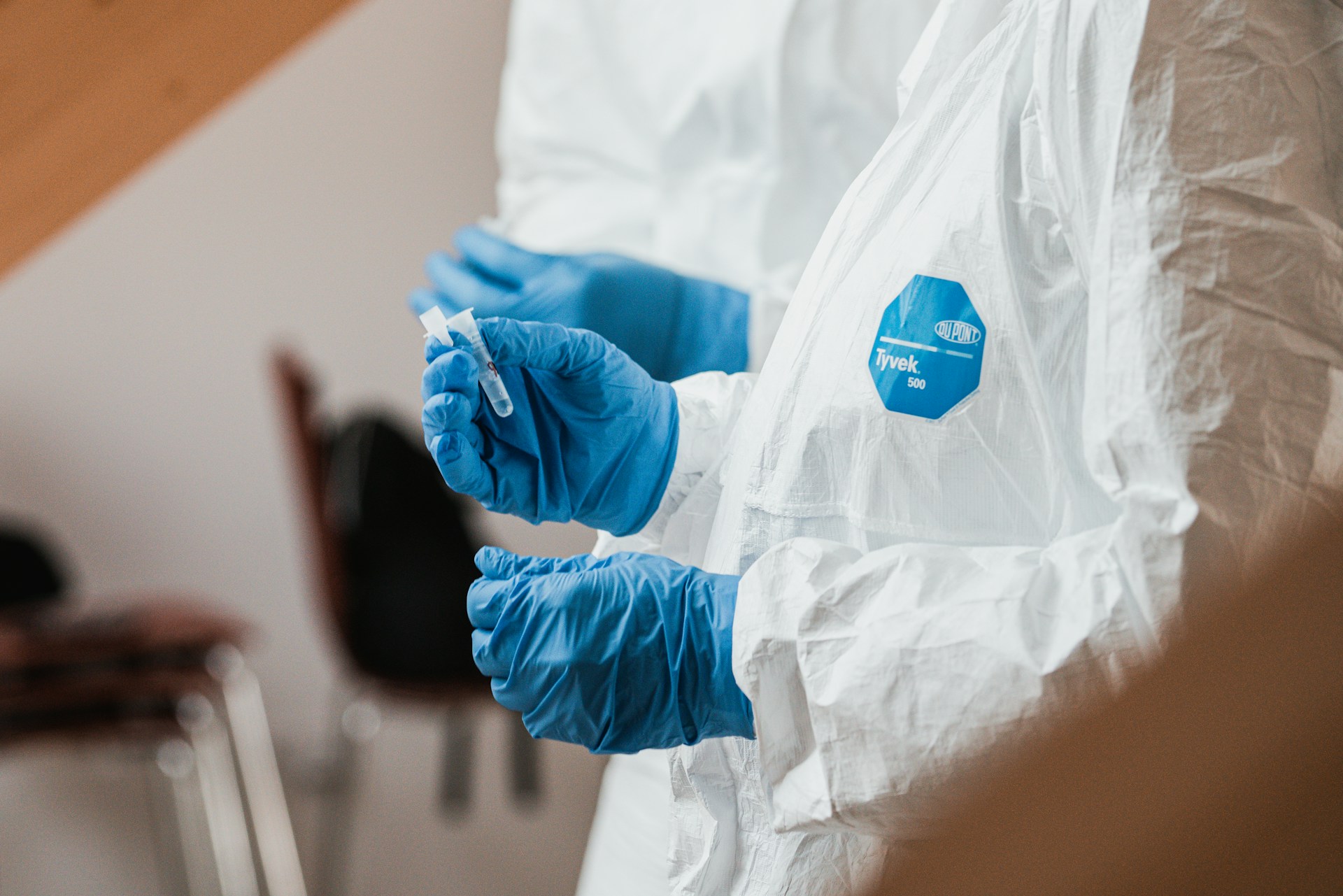 Photo by Jan Kopřiva on Unsplash
These are the real advance in point-of-care testing. They detect the virus’s genetic material rather than its proteins, so sensitivity is 90 to 95 percent, close to laboratory PCR, yet results arrive in 15 to 30 minutes on a small benchtop instrument. Some are approved for use outside a laboratory. The CDC lists them alongside RT-PCR as the tests to use when a reliable answer is needed quickly.
Laboratory PCR and multiplex panels
RT-PCR remains the reference standard and is the test the CDC recommends for hospitalised patients, for whom rapid antigen tests are not recommended at all. Multiplex molecular panels test one sample for influenza and other respiratory viruses at once, which the CDC says can help distinguish flu from other pathogens in severely immunosuppressed patients and identify the cause of an outbreak in an institution. Combined flu and COVID-19 PCR tests are now routine in many laboratories. For those seeking local information about coronavirus screening, our guide to PCR testing in Dubai covers COVID-19 testing separately from influenza diagnosis.
Home tests
The US FDA has granted marketing authorisation to an over-the-counter antigen test that detects COVID-19 and influenza A and B from one nasal swab in about 15 minutes, the first flu test for home use to pass a full premarket review rather than an emergency authorisation. In the study reported by MLO, it correctly identified 99.9 percent of flu-negative samples, 92.5 percent of influenza A positives and 90.5 percent of influenza B positives in people with symptoms. It is for self-testing from age 14 and for children from age 2 when an adult collects the sample. Availability outside the US varies, so ask a pharmacist what is sold locally. If you need pharmacy assistance outside regular working hours, our guide to 24-hour pharmacies in Dubai can help you find suitable locations.
Timing Is Everything
Viral shedding is highest in the first few days of illness, so the CDC advises collecting the sample as early as possible, ideally less than four days after symptoms start. Negative results become less reliable after three days, and an upper respiratory swab can miss infection in someone whose disease has moved to the lungs. Each test kit specifies the swab it accepts, usually a nasopharyngeal or nasal swab, and using the wrong one lowers accuracy.
What a Negative Test Means
With a rapid antigen test, not much on its own. The CDC advises clinicians to consider confirming a negative RIDT with a molecular test when flu is circulating and the patient’s symptoms still suggest it, and to confirm a positive RIDT when little flu is circulating, because false positives then become more likely. Most importantly, antiviral treatment should not be withheld from a patient with suspected flu on the strength of a negative rapid test, and for hospitalised patients antivirals should start as soon as possible without waiting for any result. If symptoms persist despite a negative test, an internal medicine doctor in Dubai can assess whether further testing or treatment is necessary.
Flu Testing for Children
Young children are among the groups at higher risk of flu complications, so an early, reliable answer matters. The sample is the uncomfortable part. A nasopharyngeal swab reaches the back of the nose; a shallower nasal swab is easier on a child and is accepted by many rapid molecular tests and by the FDA-authorised home test. Ask the clinic which swab its test uses. Our list of paediatricians in Dubai can help you find a clinic.
Questions to Ask Your Clinic
- Is the test an antigen test or a molecular test?
- Does it also check for COVID-19 or other viruses?
- How long until the result, and will treatment start at this visit?
- What swab does it use?
- If it is negative but my symptoms continue, will you confirm with a PCR?
If visiting a clinic is difficult, doctor-on-call services in Dubai may provide an alternative for an initial medical assessment, although the availability of flu testing depends on the provider.
Prevention Still Comes First
Testing finds flu; it does not prevent it. Annual vaccination, hand washing, keeping sick children home and avoiding close contact with people who are coughing remain the basics, and the CDC recommends the flu vaccine for everyone from six months of age with rare exceptions.
Frequently Asked Questions
What is the most accurate flu test?
Laboratory RT-PCR, with rapid molecular tests close behind at 90 to 95 percent sensitivity. Rapid antigen tests are the least sensitive at 50 to 70 percent.
How fast can a flu test give results?
Rapid antigen tests take 10 to 15 minutes and rapid molecular tests 15 to 30 minutes. Laboratory PCR takes 45 minutes to several hours once the sample reaches the lab.
Can a flu test be wrong?
Yes. Rapid antigen tests miss a large share of true cases, and any test can miss flu if the sample is taken too late or with the wrong swab. False positives are uncommon but more likely when little flu is circulating.
Is there a test that checks for flu and COVID-19 together?
Yes. Multiplex laboratory panels and many rapid molecular tests test for both, and an over-the-counter antigen test that detects both has FDA marketing authorisation.
Do I need a test before taking antivirals?
No. The CDC says antiviral treatment should not be withheld from someone with suspected flu because of a negative rapid test, and that treatment for hospitalised patients should not wait for results.
Can I test for flu at home?
In the US, yes, with the FDA-authorised combination test. Availability in the UAE varies, so ask a pharmacist.
Which test is best for a child?
A rapid molecular test gives a reliable answer within the visit, and many accept a shallow nasal swab that is easier on a child than a nasopharyngeal swab.
When should I get tested?
As early as possible, ideally within four days of symptoms starting, because that is when the virus is easiest to detect and when antivirals help most.

Eugene M. Lee is a traveler and explorer at heart. He has journeyed to all seven continents, and his thirst for new experiences shows no signs of abating. A writer by trade, Eugene’s work has taken him to some of the most remote corners of the world.
